Blog Details

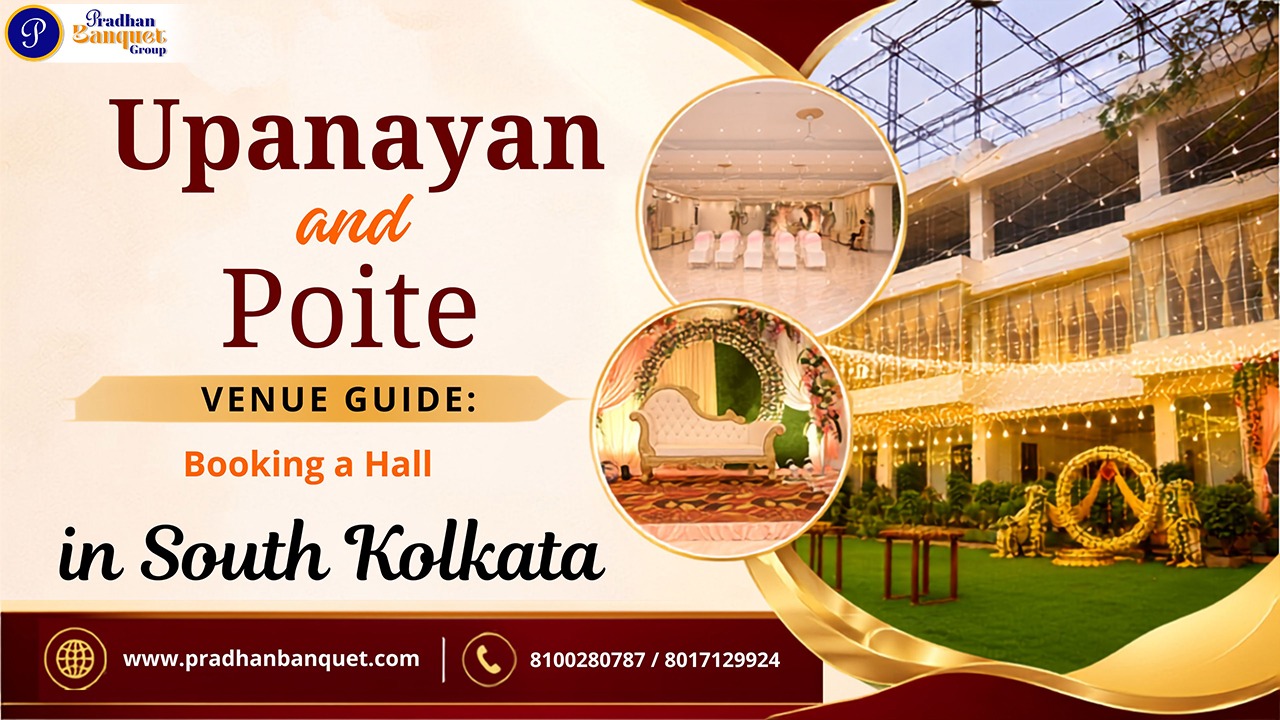
An upanayan or poite ceremony needs a different venue plan from a birthday, wedding or reception. Your family may need an early start, space around the sacred fire, a vegetarian kitchen arrangement and comfortable seating for relatives who will stay through the rituals.
Start with the ceremony.
The best upanayan venue in Kolkata for your family should support your purohit, the priest conducting the rituals, and the schedule you agree with him. Before comparing flowers or stage designs, check morning access, ritual arrangements, meal service and the journey your guests will make.
For example, suppose your purohit needs to start preparations at 6 a.m. A hall that opens at 8 a.m. will not suit that plan, however attractive the booking package looks.
Upanayan marks entry into religious learning. Harvard University’s Pluralism Project explains the name through the idea of drawing near a guru, or teacher, to begin learning the Vedas, Hindu sacred texts. The sacred thread represents the wearer’s readiness for that learning and ritual responsibilities. Read the Pluralism Project’s explanation.
Bengali families also call it a poite ceremony, using the Bengali name for the sacred thread. New World Encyclopedia lists the regional names.
Rituals can include prayers, a sacred fire, receiving the thread and instruction in the Gayatri mantra. The Pluralism Project describes these elements in its account of an Upanayana ceremony. Ask your purohit which steps your family will follow. Read the ceremony account.
Plan the booking around your family’s complete programme. Ask the purohit to estimate time for preparation, sankalpa, the statement of ritual intention, preliminary prayers, homa, the sacred fire ritual, and the thread ceremony.
Then allow for guest arrival, blessings, photographs and the meal.
Avoid choosing a hall package by the ritual duration alone. Give the venue separate times for setup, the ceremony, lunch and departure, with some spare time between them.
A useful venue visit should answer three questions: can you start on time, can your purohit conduct the ceremony there, and can your guests stay comfortably?
The muhurat is the auspicious time your purohit selects for the ceremony. Work backwards from it.
Ask when the family, decorator and caterer can each enter. Check when staff will unlock the hall, switch on the lights and make the toilets available.
There is a practical example on Nikunja’s booking page: it lists an Upanayan slot from 6 a.m. to 6 p.m., while kitchen entry starts at 7 a.m. So an early hall booking does not automatically give the caterer equally early access.
If you want tea or breakfast before kitchen entry, agree on how the caterer will provide it. Also record any charge for access before the booked slot.
Do not treat an Upanayan package as automatic permission for every fire arrangement.
For example, Pradhan Banquet’s VCCCH Gate 2 page lists a ritual fire vessel among its equipment, while its usage terms prohibit wood and certain other heating materials across the venue. The page does not explain how a homa arrangement fits those restrictions. Check the VCCCH Gate 2 equipment and terms.
Ask the manager:
Do you permit our proposed homa indoors, or only in a particular area?
Which fuel and fire vessel do you permit?
What fire-safety arrangements will your team provide?
Who handles any approval the arrangement requires?
Can our purohit inspect the space beforehand?
Will you record the agreed arrangement in writing before we pay the advance?
If the manager and purohit cannot agree on a permitted arrangement, choose another space for the rituals.
Ask your purohit to describe the space he needs. Include seats for the boy and parents, a place for ritual materials, water access and any table, piri, a low wooden seat, or platform.
Walk through the proposed layout together. Where will relatives sit? Where will the photographer stand? Can someone bring water without crossing through the ceremony?
Choose one family member to coordinate with the purohit and venue manager. Give that person the schedule and both contact numbers. Agree on microphone use for mantras and announcements before the event.
Use these checks during your first visit:
Early entry: Record when staff will open the premises for your family and suppliers.
Muhurat timing: Match the booking slot to preparation, rituals and lunch.
Homa arrangement: Settle the permitted location, equipment and fuel.
Ritual space: Mark seats, platforms and material storage on the proposed layout.
Vegetarian catering: Give the caterer your exact ingredient requirements.
Kitchen access: Check preparation space, utensils and the caterer’s entry time.
Guest seating: Count seats with the ritual and dining arrangements in place.
Parking: Ask for the number of available spaces and any parking charge.
Elderly access: Walk from the drop-off point to the hall, dining area and toilets.
Decoration and sound: Review supplier rules, microphone arrangements and decoration limits.
Before discussing dishes, ask your family and purohit about ingredient restrictions. Give the caterer one agreed list.
Be specific. If you require food without onion and garlic, write that down. If preparation in separate utensils matters to your family, discuss the utensils and cooking arrangements too.
Use this as a starting menu to discuss, adjusting it to your customs and guest preferences:
Early refreshments: Tea and a light breakfast, with luchi and cholar dal as one option.
Main meal: Rice, moong dal, shukto, seasonal vegetables and a paneer preparation or vegetable curry.
Accompaniments: Chutney and papad.
Dessert: Payesh and one or two sweets.
You do not need every dish. For a smaller gathering, choose a shorter menu that the caterer can serve at the agreed time.
Ask for a tasting of the dishes you actually intend to order. A tasting of a different menu will tell you little about your chosen lunch.
Ask whether the venue permits an outside caterer and what kitchen charges apply. For Jain meals or other dietary requests, provide the exact exclusions and request a separate serving plan if you need one.
Agree on breakfast and lunch times, buffet or seated service, and assistance for elderly guests. Check whether the caterer offers smaller portions for children and how those portions affect billing.
Finally, settle the minimum billable guest count and the deadline for changing it. Keep that number separate from your invitation count.
Start with where your guests live. Then compare the actual journey to each hall, including the final stretch from public transport or the car drop-off point.
Use the following questions to organise your search. These are selection checks, rather than claims that one locality suits every family.
| Area | What to check while shortlisting |
|---|---|
| Garia | If you want an upanayan venue near Garia, compare the exact address with your relatives’ starting points. Include Kamalgazi options if the journey suits them. |
| Tollygunge | Compare public transport access with the final ride or walk to the entrance. |
| Jadavpur | For a poite hall in Jadavpur, check whether your closest relatives can reach the morning rituals without several changes of transport. |
| Kasba | Ask how cars will approach the entrance and where guests can get down. |
| Ballygunge | Compare journeys from different parts of the city before choosing it as a meeting point. |
| Dhakuria | Check the approach road and the walking distance from the drop-off point. |
| Rash Behari | Agree on a clear landmark and pickup point for guests unfamiliar with the address. |
| Lake Gardens | Inspect the entrance and arrangements for guests who need help walking. |
| Behala | Compare venues near the largest group of invitees with options farther away. |
| New Alipore | Check parking and whether guest vehicles will need to wait away from the hall. |
For any sacred thread ceremony venue in South Kolkata, share the exact map pin and entrance details with your invitation. Try the journey near your planned arrival time before booking.
Pradhan Banquet lists Nikunja, Avinandan and VCCCH among its venues. Their locations give you different starting points for a shortlist. See Pradhan Banquet’s venue directory.
The group’s Southern Bypass guide publishes broad guest ranges for these halls. Treat these as initial enquiry figures. Ask the manager to confirm how many people can sit together with your ceremony layout. See the published capacity ranges.
Nikunja’s listed address is the fourth floor of Kamalgazi Municipality Market Building, Kamalgazi More, Kolkata 700103. Its venue page includes Upanayan booking options. Explore Nikunja banquet hall in South Kolkata.
Shortlist it if Kamalgazi suits your family’s travel plans. During your visit, check the lift journey, the entrance from the road and the route to the toilets.
Ask the team to show a layout with the ritual area, guest chairs and meal service together. Request usable hall measurements if you need to compare space with another venue.
Avinandan lists its address as 517 Brahmapur Road, Bansdroni, Kolkata 700096, near Brahmapur Battala Bazar and Bandhan Bank. Its page describes catering services and lists morning Upanayan packages. Explore Avinandan banquet hall.
Shortlist it if this location works for your closest relatives. Discuss how the team will arrange seats around the ceremony and serve lunch without asking guests to move repeatedly.
At the site visit, check parking numbers, entrance steps and toilet access. Request a vegetarian menu proposal that follows your family’s requirements.
VCCCH stands for Vidyasagar Central Club Community Hall. Pradhan Banquet lists its address at 2/38 Vidya Sagar Main Road, Vidyasagar Colony, Ganguly Bagan, Kolkata 700047. See the listed VCCCH address.
Its two options cover different spaces. The Gate 1 page describes a small lawn, second floor and rooftop. The Gate 2 page describes a lawn with ground and first floors.
Consider VCCCH if you want to compare these layouts for rituals and dining. Ask which floors and outdoor areas your booking includes, then check how elderly guests will move between them.
Use the linked venue pages above alongside this comparison. “Confirm” means you need an answer for your particular booking.
| Feature | Nikunja | Avinandan | VCCCH |
|---|---|---|---|
| Listed location | Kamalgazi | Brahmapur Road, Bansdroni | Vidyasagar Colony, Ganguly Bagan |
| Broad guest range in the group’s guide | 300–400 | 200–300 | 400–600 across the Gate 1 and Gate 2 listing; clarify scope |
| Morning Upanayan option | Published | Published | Published for Gate 2; check selected option |
| Homa arrangement | Confirm in writing | Confirm in writing | Confirm in writing |
| Vegetarian menu and preparation | Confirm requirements | Confirm requirements | Confirm requirements |
| Parking spaces | Request exact count | Request exact count | Request count for selected gate |
| Elderly access | Inspect fourth-floor access | Inspect entrance and internal route | Inspect access between booked floors |
| Main reason to shortlist | Kamalgazi location | Brahmapur/Bansdroni location | Choice of floor and lawn arrangements |
The broad capacity figures come from Pradhan Banquet’s venue comparison. They do not establish seated ritual capacity or usable floor area. Request both before choosing between halls.
Ask for a quotation for your date, guest count and ceremony schedule. A package heading alone will not tell you the full amount you need to budget.
Have the venue price these items separately:
Hall rental for the agreed hours and spaces.
Catering, breakfast and drinking water.
Decoration, including any fresh flowers or custom ritual setup.
Air-conditioning hours and additional time.
Photography, microphones and other requested services.
Taxes and service charges.
Ask whether the date, season or weekend affects the quote. Compare a morning booking with a longer slot only after checking how much preparation and clearing time you need.
Use a direct request: “Please show the total payable amount, including hall rent, catering, GST, decoration, service charges and extra hours.”
GST means Goods and Services Tax. Ask the venue to show any applicable tax separately on its quotation.
Also request the payment schedule, minimum catering bill, date-change terms and cancellation terms. Compare venues using the same guest count and menu, otherwise the totals will not give you a fair comparison.
Start checking availability once your purohit gives you a suitable date and time. If your family can consider more than one date, share those alternatives with the venue together.
For weekends or dates around festivals, ask about the exact slot you need. Do not assume that a hall’s availability for lunch also covers early preparation.
Use the certainty of your ceremony date as the starting point. There is no verified booking lead time here that applies to all three venues.
Before paying, leave yourself enough time for a site visit, the purohit’s layout review, menu selection and guest travel arrangements. Ask how long the venue will hold an enquiry, whether that hold needs payment and when it expires.
A venue’s broad guest figure does not answer how your event will work. Ask the manager to draw the ritual space and dining arrangement first, then count the remaining guest seats.
Bring your purohit’s requirements to the first serious booking discussion. Late changes leave less time to arrange equipment or find a suitable alternative space.
Ask one family member to collect everyone’s requirements and send the final ingredient list to the caterer. This avoids different relatives giving conflicting instructions.
A 7 a.m. ceremony needs a separate preparation plan. List what must happen before it starts, who will do each job and when that person can enter.
Walk the full guest journey. Look at entrance steps, the distance to the lift, seating near the rituals and access to toilets. Ask an elderly relative what assistance they will need.
Save this list before your final discussion:
Confirm the date and muhurat.
Record morning entry and setup times.
Settle the homa arrangement in writing.
Share the purohit’s equipment and seating requirements.
Approve the vegetarian menu.
Confirm seated capacity and meal service.
Check parking and the drop-off point.
Walk the elderly guest access route.
Review decoration and sound rules.
Keep the complete quotation and booking receipt.
Before transferring the advance, also ask who will manage your event on the day, whether another function will share any space, and what happens if the programme runs beyond the agreed departure time.
Choose the hall that meets your ceremony requirements and gives you clear written answers. An attractive room or a broad guest range cannot establish that on its own. Compare your shortlisted venues using the same schedule, layout and menu.
Decide this with your family. Give the venue two separate counts if fewer people will attend the rituals than the meal. Ask it to explain how each count affects seating, service and billing.
Ask for a meal-only event proposal and explain that the rituals will happen elsewhere. Then work out transport for the boy and immediate family, their arrival time and when the caterer should start serving.
Send the full address, map pin, ceremony reporting time and one family contact number. Ask whether they need accommodation or pickup help, and keep those arrangements separate from the hall booking unless the venue expressly includes them.
To compare Nikunja, Avinandan and VCCCH, share your preferred date, muhurat, guest count and vegetarian food requirements with Pradhan Banquet.
Ask the team to identify a suitable morning slot, explain the ritual arrangements and prepare a quotation for the exact space you need.
Check banquet hall availability and arrange a visit with the family member coordinating your ceremony.
2026-10-06

2026-09-25

2026-09-10

2026-09-03

2026-08-20
2026-08-13

2026-08-12

2026-08-10
2026-08-08

2026-08-04